

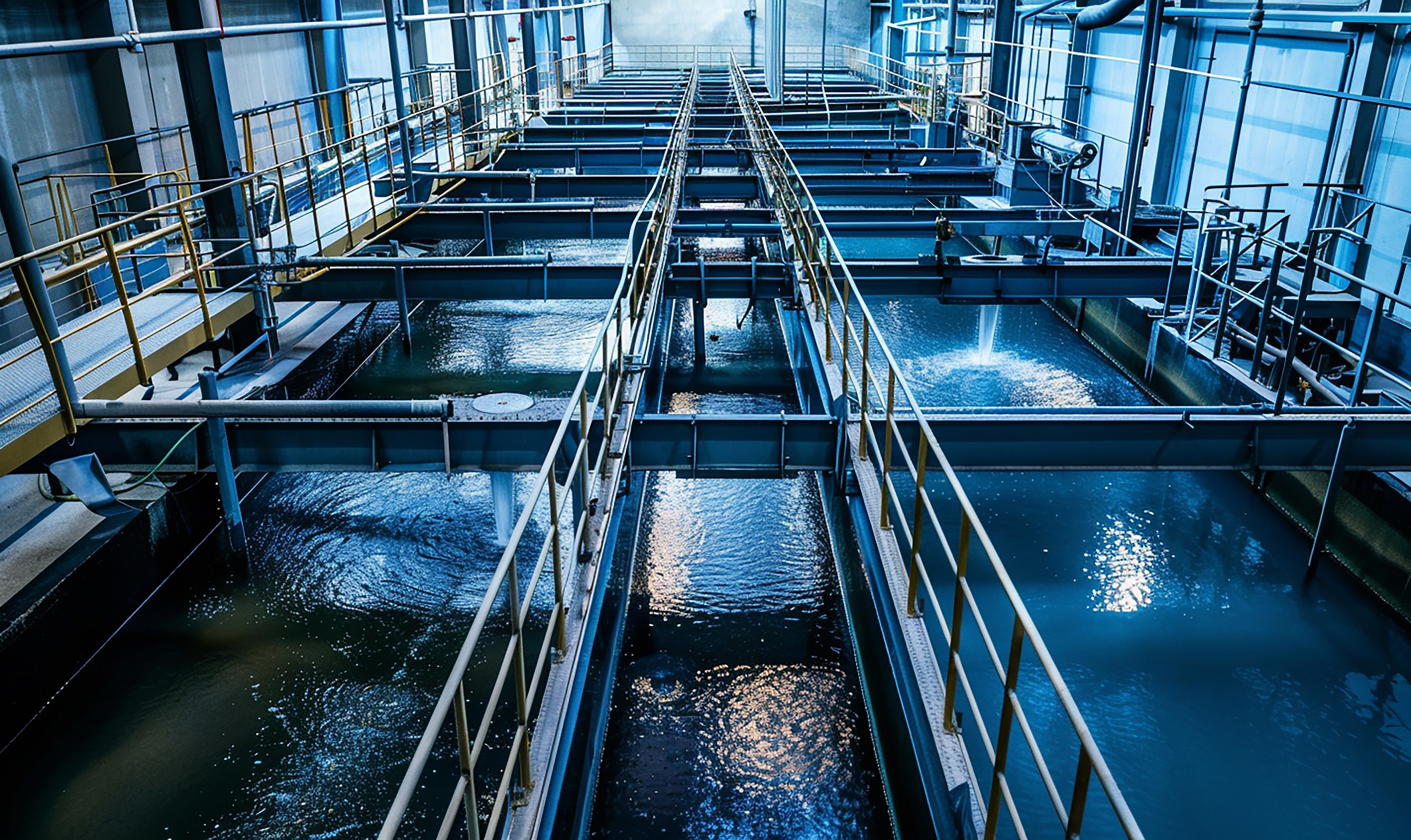
Effluent Treatment Plant
Effluent is produced by various manufacturing industries such as textiles, pharmaceuticals, chemicals, and tanneries. Contaminated water cannot be released untreated as it contains both toxic and non-toxic chemicals. Discharging untreated effluent can contaminate clean water sources and harm the environment.
Therefore, Effluent Treatment Plants (ETPs) are essential in most manufacturing industries. SVG’s ETPs are designed to remove high levels of organic compounds, debris, dirt, grit, pollutants, and both toxic and non-toxic materials from industrial effluent.
These plants use techniques like evaporation, drying, centrifuging, filtration, and incineration for effective chemical processing and effluent treatment.
- Quality
- Easy to use
- Affordable
- Durable
ETP Plant Operation
Screen Chamber: This chamber removes larger solids to prevent mechanical equipment abrasion and avoid clogging in the hydraulic system.
Collection Tank: Collects effluent from the screening chamber, stores it, and pumps it to the equalization tank.
Equalization Tank: Effluent concentrations vary over time, and pH levels fluctuate. Effluents are stored for 8 to 12 hours to achieve homogenous mixing and neutralization. Continuous mixing prevents solid settling and reduces SS (Suspended Solids) and TSS (Total Suspended Solids).
Flash Mixer: Coagulants are added to the effluent: Lime (800-1000 ppm) to adjust pH to 8-9. Alum (200-300 ppm) to remove color. Poly electrolyte (0.2 ppm) to settle suspended solids and reduce SS, TSS. Rapid mixing promotes the formation of micro flocs, ensuring thorough chemical interaction.
Clariflocculator: Water circulates continuously through the clariflocculator via a stirrer. Slow mixing results in macro flocs, which settle in the clarifier zone. Overflowing water moves to the aeration tank. Settled solids are collected separately, reducing SS and TSS.
Aeration Tank: After clarification, effluent moves to the aeration tank for aerobic treatment. Air blowers or diffusers introduce air to maintain the necessary dissolved oxygen (DO) level for bacteria growth. This process reduces BOD (Biological Oxygen Demand) and COD (Chemical Oxygen Demand) by breaking down organic matter, lowering BOD and COD values by up to 90%.
Secondary Clarifier:Overflow from the aeration tank is directed into the secondary clarifier for solid-liquid separation. The settled solids, called biological sludge, are partially recycled back into the aeration tank to maintain the desired MLSS (Mixed Liquor Suspended Solids) level, while the rest is conveyed to the sludge collection tank for further treatment. The treated water is checked for quality and disposed of through pipelines.
Sludge Thickener: Inlet sludge consists of 60% water and 40% solids. Effluent is passed through a centrifuge, separating solids from liquids. The sludge thickener reduces water content to 40% water and 60% solids. The effluent is reprocessed, and the sludge is collected at the bottom.
Drying Beds: Primary and secondary sludge are dried on drying beds to further reduce the water content.
Frequently asked questions
An Effluent Treatment Plant is a system used to treat wastewater generated from industrial processes before it is discharged into the environment. It ensures compliance with regulatory standards, protects natural water bodies, and promotes sustainable water management.
ETPs are suitable for industries like textiles, chemicals, pharmaceuticals, food processing, paper and pulp, leather, and more, where wastewater contains harmful pollutants that need specialized treatment.
SVG incorporates advanced technologies like biological treatment, chemical coagulation, membrane filtration, activated carbon filtration, and reverse osmosis, ensuring effective removal of pollutants and optimal system performance.
Yes, treated water from ETPs can often be reused for non-potable purposes such as cooling, boiler feed, irrigation, or other industrial processes, depending on the quality of treatment and local regulations.
Absolutely! SVG specializes in designing tailored ETP solutions that address the specific wastewater characteristics and regulatory requirements of various industries, ensuring efficient and cost-effective operations.